Study Tips8 min read
How to Study for Finals
Finals get easier to plan when you stop treating every class and every chapter the same. Sort the material, test what you know, and spend the last review on real gaps.
 By Pranay
The Studi study room
Practical ways to turn your own notes, lectures, and study time into a review routine that makes sense for the test in front of you.
Finals get easier to plan when you stop treating every class and every chapter the same. Sort the material, test what you know, and spend the last review on real gaps.
By Pranay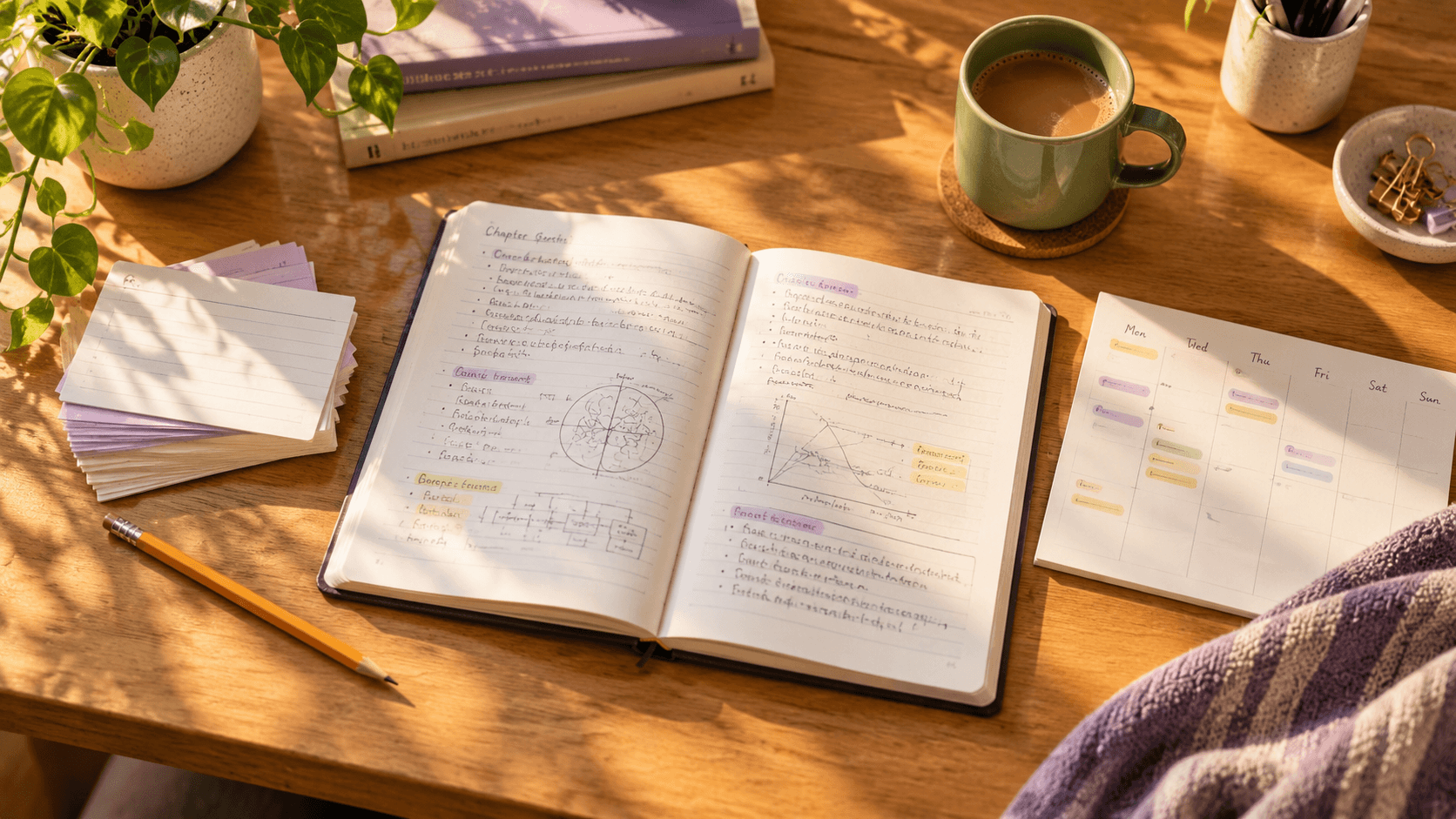
Midterms are usually several classes and several units arriving at once. Start by sorting the work, then spend your time testing what you can recall instead of trying to reread everything.
 By Ben Hirsch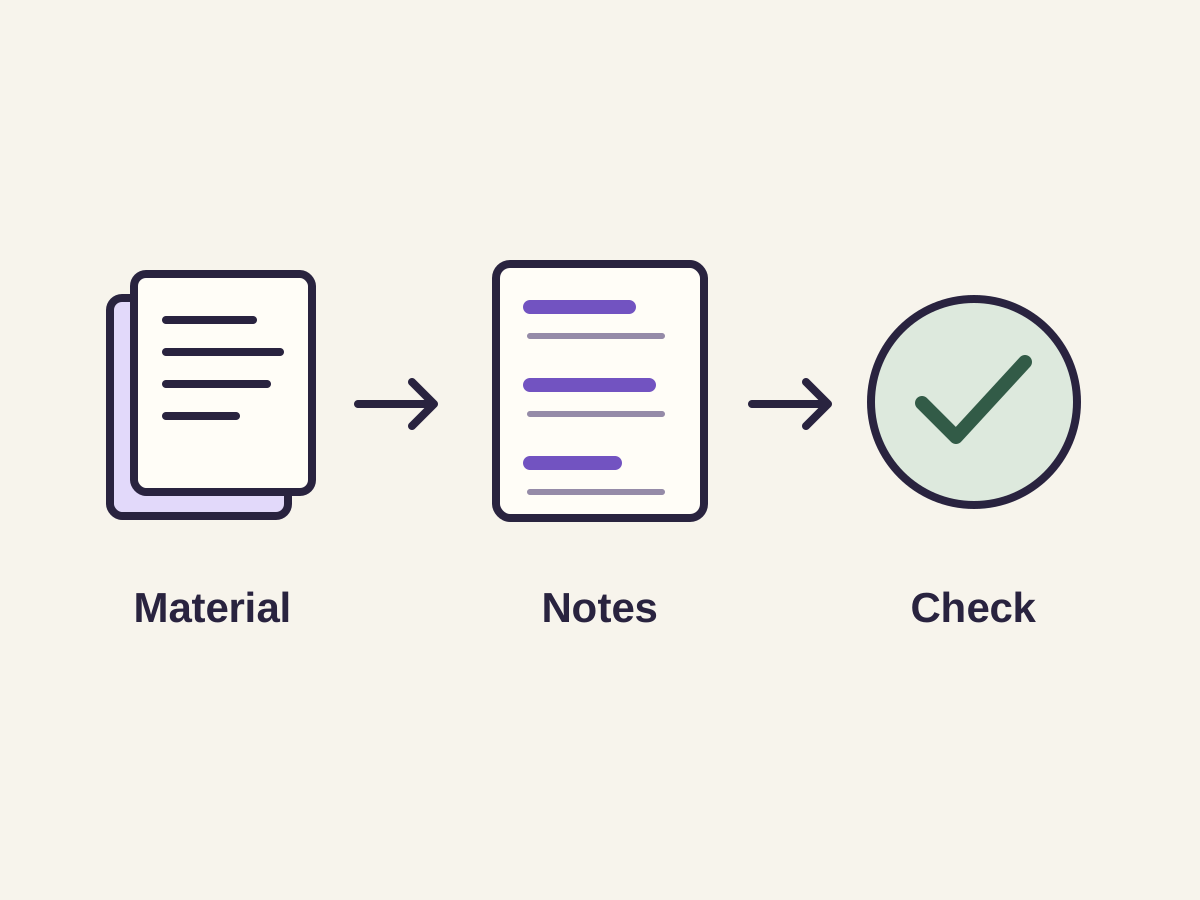
Turning a messy lecture into clean notes automatically sounds like magic, but it's a specific, understandable process with specific failure points. Here's what an AI lecture note taker actually does, what to watch for, and how to use it as part of a real study routine rather than a replacement for one.
By Pranay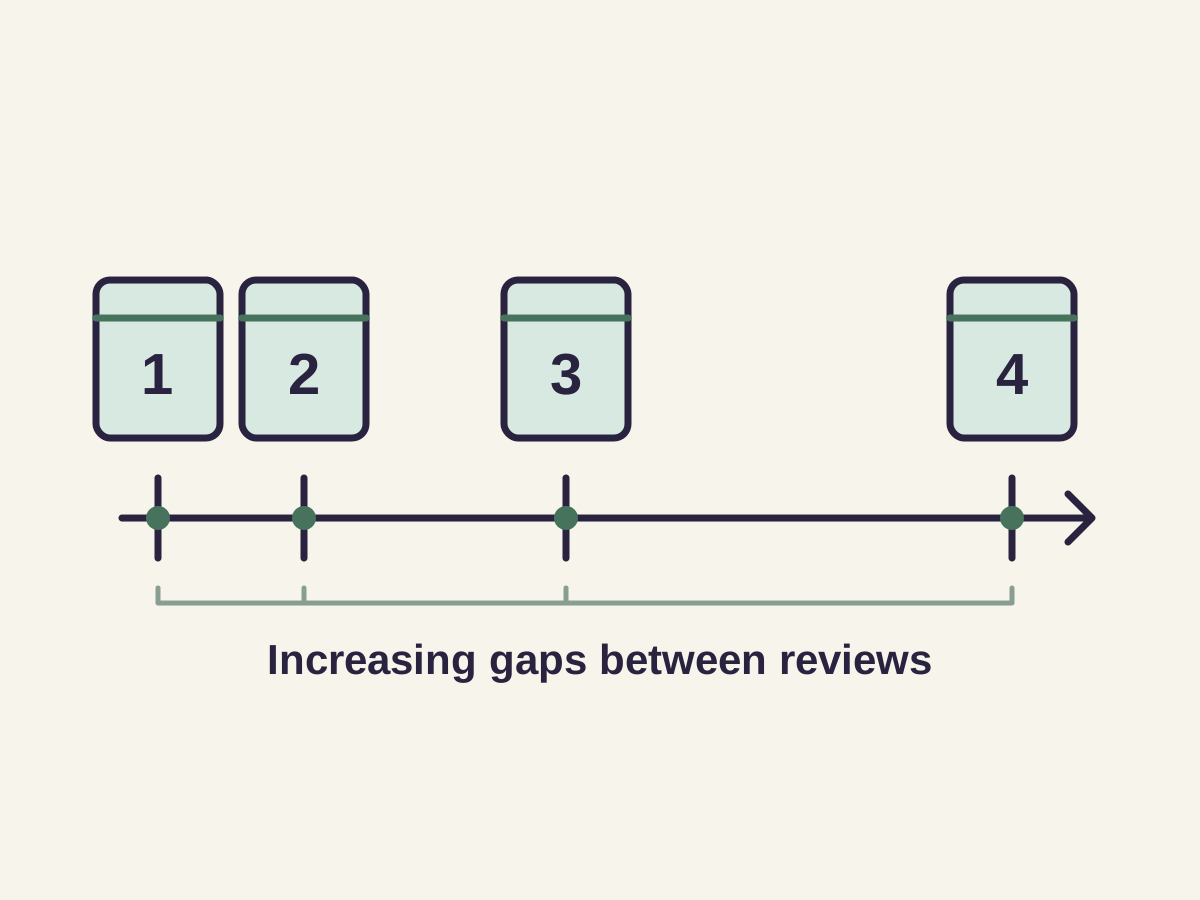
Cramming feels productive right up until the test is over and you've forgotten most of it a week later. Spaced repetition — reviewing material at increasing intervals over time — is the scheduling principle that makes studying stick. Here's how to actually apply it.
By PranayA practice test only helps if it tests what you'll actually be tested on. Here's how to build one from your own class notes instead of a generic question bank, what separates a useful practice question from a weak one, and how to grade yourself without fooling yourself.
By PranayAn AI tutor is available at midnight before a test, never gets impatient with the same question asked three different ways, and can re-explain a concept from a completely different angle instantly. It's also not the right tool for everything. Here's how to actually use one.
By Ben HirschNot all PDFs are the same document under the hood, and treating a scanned textbook chapter the same way you'd treat a searchable one is where most PDF study workflows go wrong. Here's what actually differs, what commonly gets extracted incorrectly, and how to check your study material before you trust it.
By Pranay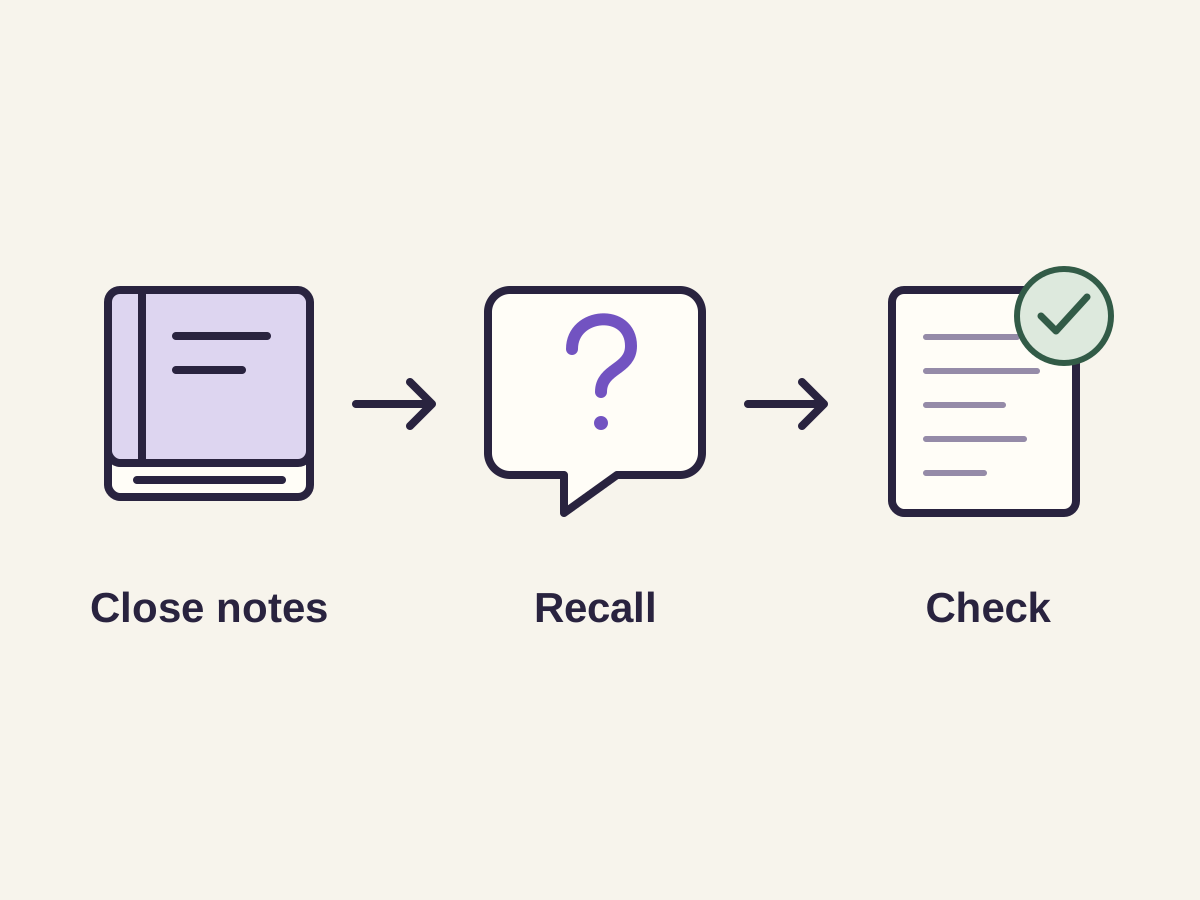
Rereading your notes feels productive but barely helps you remember anything. Active recall — closing the book and testing yourself — is the study method with the strongest research behind it. Here's how to actually do it.
By Ben HirschIf you're staring at a wall of lecture notes wondering how they're supposed to become something you can actually study from, here are four ways to get there — including the one that takes about 15 seconds.
By Ben Hirsch