Key takeaways
- Spaced repetition means reviewing at growing intervals instead of all at once.
- Cramming helps tomorrow but fades fast; spacing is what builds long-term memory.
- Each review must be active recall. Spaced rereading doesn't get the same benefit.
- Spend more review time on what you miss and less on what you already know cold.
In this articleShow
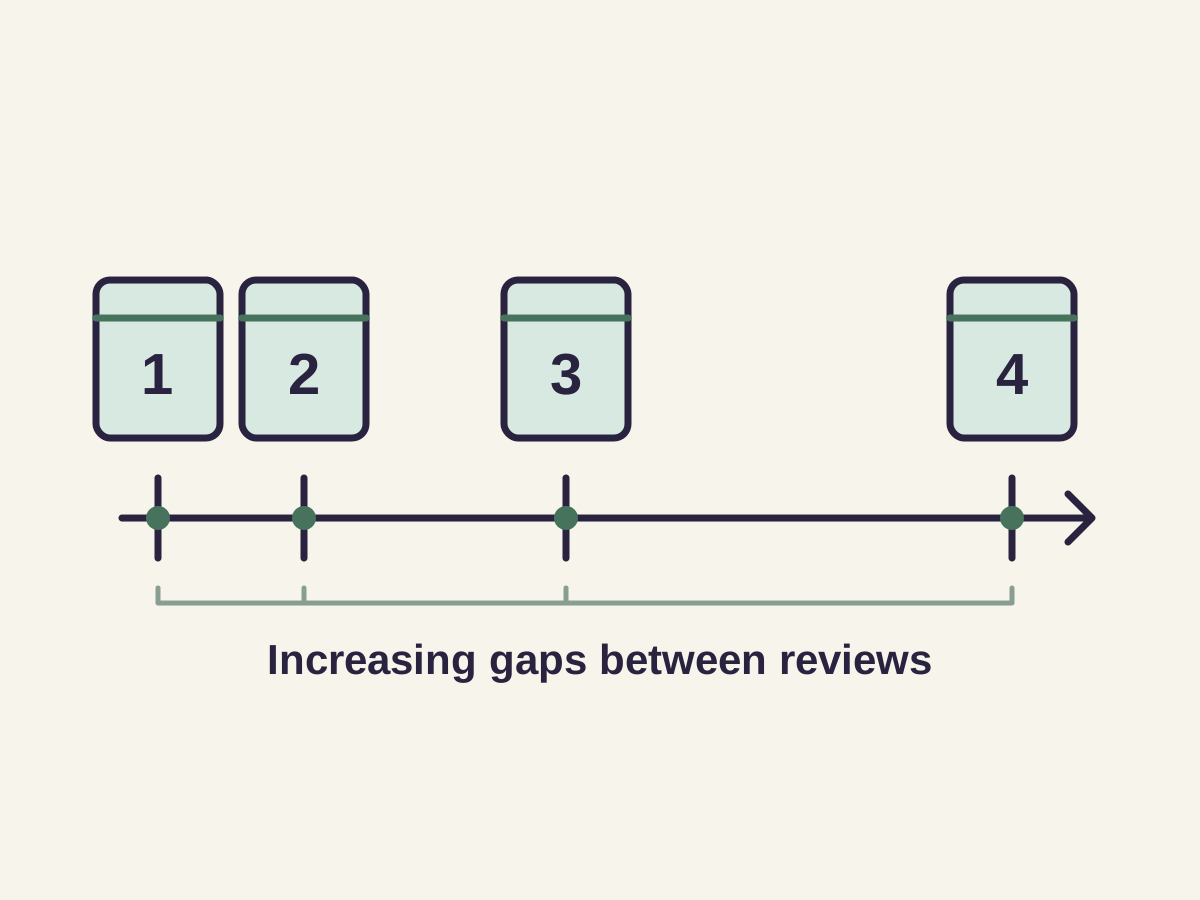
Spaced repetition means reviewing material at gradually increasing intervals — once, then again a couple days later, then again a week later, then again a few weeks later — instead of reviewing it repeatedly in one sitting or not reviewing it again until right before the next test. It works because memory decays faster right after you first learn something and more slowly each time you successfully retrieve it again, so reviewing right as you're about to forget something (rather than while it's still fresh) is what actually strengthens long-term retention.
Why cramming feels effective but isn't
Reviewing the same material five times in one evening feels thorough, and it will genuinely help you recognize the material tomorrow. The problem is the timescale: information crammed the night before an exam is exactly the information most likely to be gone a month later, because it was never revisited after the point where you'd normally start forgetting it. Spaced repetition intentionally reviews material close to the point of forgetting, which is a less comfortable feeling in the moment (you'll often feel like you've forgotten more than you have) but produces retention that survives past the test.
How a spaced repetition schedule actually works
The basic pattern: review new material shortly after learning it (same day or next day), then again after a few days, then again after a week or two, then again after a month — each successful review pushes the next one further out, while a failed review (you couldn't recall it) resets the interval back down. This is the same logic most flashcard apps use to decide which cards to show you more or less often — cards you consistently get right start appearing less frequently, and cards you miss come back sooner.
Spaced repetition needs active recall to work
Spacing out review only helps if the review itself is active — testing yourself, not rereading. Rereading a page on a spaced schedule is still passive review, just spread out over more days; it doesn't get the retrieval-practice benefit that active recall provides. The two work together: active recall is what you do in each review session, spaced repetition is when you do it. Studi's flashcard tool combines both automatically — it generates cards for self-testing and schedules which ones to show you based on how well you've been recalling each one.
A practical weekly schedule
- The day you learn new material: do a first active-recall pass (flashcards or a few practice questions) the same day, while the material is still easy to check yourself against.
- 2-3 days later: review the same material again, focusing more time on anything you got wrong the first time.
- About a week later: review again, and if you're consistently getting a card or concept right, let it drop to a longer interval rather than continuing to review it as often as newer material.
- In the weeks before an exam: rotate through everything covered so far on a spaced schedule, rather than switching to cramming mode — see how to make a practice test from your notes for building the self-testing material a spaced schedule reviews.
Common mistakes
- Reviewing everything on the same schedule regardless of how well you know it — material you already know cold doesn't need daily review, and reviewing it anyway wastes time that would help more spent on your actual weak points.
- Abandoning the schedule and cramming once an exam gets close — this is exactly when spaced review matters most, since the material closest to the exam needs to survive past it, not just until the test.
- Treating rereading as if it were spaced review — spacing without active recall in each session doesn't get the same benefit; the review itself has to involve testing yourself, not just looking at the material again.
Questions students ask
What is spaced repetition?
Spaced repetition is reviewing material at gradually increasing intervals over time — shortly after learning it, then a few days later, then a week later, then longer — rather than cramming it all in one session or not reviewing it again until right before a test.
Why is spaced repetition better than cramming?
Cramming produces recognition that fades quickly because the material is never revisited after the point where forgetting naturally sets in. Spaced repetition intentionally reviews material close to when you'd start forgetting it, which is what strengthens long-term retention rather than just short-term recognition.
Is spaced repetition the same as active recall?
No, but they work together. Active recall is testing yourself instead of rereading; spaced repetition is the schedule you apply that testing on. Spacing without active recall in each session (e.g. spaced rereading) doesn't get the same retention benefit.
Do flashcard apps automatically use spaced repetition?
Many do — cards you consistently answer correctly get shown less often, and cards you miss come back sooner. Studi's flashcard tool schedules review this way automatically once it generates a deck from your notes.

Keep studying
Keep reading
- Study Methods· 6 min readHow to Use an AI Tutor for Studying (And When Not To)An AI tutor is available at midnight before a test, never gets impatient with the same question asked three different ways, and can re-explain a concept from a completely different angle instantly. It's also not the right tool for everything. Here's how to actually use one.
 By Ben Hirsch
 - Study Methods· 8 min readHow to Study From a PDF (Without Just Rereading It)Not all PDFs are the same document under the hood, and treating a scanned textbook chapter the same way you'd treat a searchable one is where most PDF study workflows go wrong. Here's what actually differs, what commonly gets extracted incorrectly, and how to check your study material before you trust it.
 By Pranay
 - Study Tips· 8 min readHow to Study for FinalsFinals get easier to plan when you stop treating every class and every chapter the same. Sort the material, test what you know, and spend the last review on real gaps.By Pranay


Ready to try it on your own notes?
Start from the same class material you are already reviewing, then choose the study format that helps most.
Get Started FreeTrusted by hundreds of users