Key takeaways
- Active recall means answering from memory before checking, instead of rereading.
- Rereading makes material feel familiar, which is easy to mistake for knowing it.
- Flashcards, practice questions and the blank-page method are three simple ways to use it.
- It works best spaced out over several days rather than in one long session.
In this articleShow
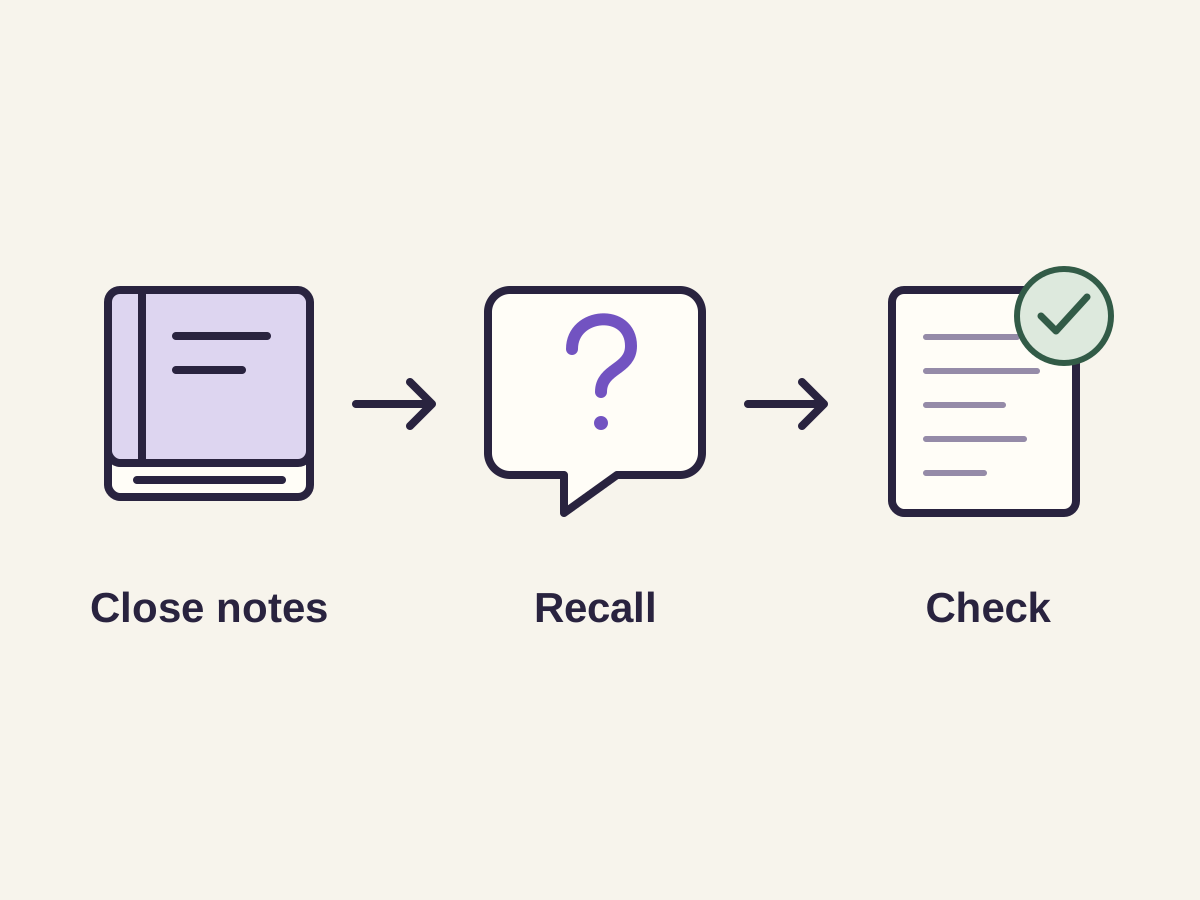
Active recall is the practice of testing yourself on material instead of passively re-reading it — closing your notes and trying to answer a question from memory, then checking if you got it right. It consistently outperforms rereading and highlighting in memory research, because the effort of retrieving an answer is what strengthens the memory, not the act of seeing the information again. Here's what that looks like in practice, and how to build it into a normal study session without extra prep work.
Why rereading feels like it's working when it isn't
When you reread a page, the material feels familiar, and that familiarity gets mistaken for knowing it. But recognizing something and being able to produce it from memory are different skills — a multiple-choice exam rewards recognition, but most real tests (short answer, problem sets, explaining a concept out loud) reward recall. Active recall trains the skill the test actually measures.
Three ways to build active recall into your studying
1. Flashcards (the classic version)
A flashcard is active recall in its simplest form: see a question or term, try to answer before flipping the card, then check. The self-testing only works if you genuinely try to answer before looking — flipping the card immediately turns it back into passive rereading. Studi's flashcard tool generates cards directly from your notes or slides, so you can start self-testing on material immediately instead of spending an hour building the deck first.
2. Practice questions instead of rereading
Closing your notes and answering practice questions — even ones you write yourself — is more effective than a fourth read-through of the same chapter. Studi's practice test generator builds questions directly from your uploaded material, so you're testing recall of the actual content you need to know, not generic questions from an unrelated question bank.
3. The blank-page method
Close your notes, take a blank sheet of paper, and write down everything you remember about a topic — then compare it to your original notes to see what you missed. This is slower than flashcards but useful for essay-style subjects where you need to recall structure and connections between ideas, not just isolated facts. If you are not sure whether what you wrote down is correct, ask Ollie Chat about your material after making your own attempt. It is still active recall when you try the answer before you check it.
How often should you use active recall?
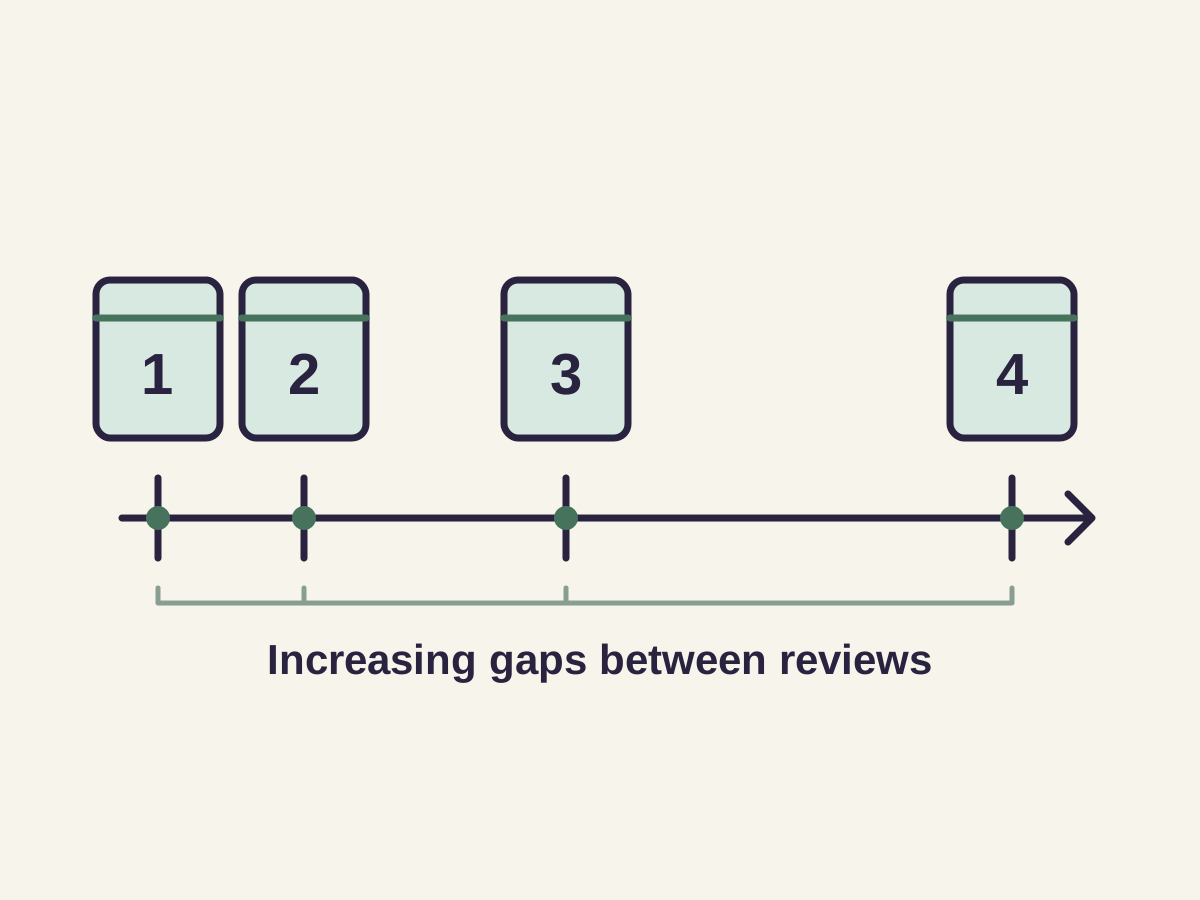
Active recall works best when it's spaced out over several days rather than crammed into one long session — testing yourself once, then again two days later, then again a week later, builds much stronger retention than testing yourself five times in one sitting. This pairing of active recall with spacing is usually called spaced repetition, and it's the same principle behind why flashcard apps schedule review dates instead of showing you every card every time.
Questions students ask
What is active recall in studying?
Active recall is testing yourself on material from memory — answering a question before checking the answer — instead of passively re-reading notes or a textbook. Research consistently shows it produces stronger, longer-lasting memory than rereading or highlighting.
Is active recall better than rereading?
Yes, for most students and most material. Rereading creates a false sense of familiarity that doesn't transfer well to test performance, while active recall trains the actual skill — retrieving information from memory — that most exams require.
What's the easiest way to start using active recall?
Flashcards are the simplest entry point: try to answer before flipping the card. Studi can generate a flashcard deck directly from your notes or slides, so you can start self-testing without spending time building cards by hand first.
How is active recall different from spaced repetition?
Active recall is the technique of testing yourself instead of rereading. Spaced repetition is the schedule you apply it on — reviewing material at increasing intervals over time instead of all at once. They're usually used together: active recall for how you study, spaced repetition for when.

About the author
Ben Hirsch
Founder of Studi
Ben Hirsch founded Studi to make studying from your own class material faster. He works on the product and writes about study methods students can actually keep up with during a busy semester.
More from Ben HirschKeep studying
Keep reading
- Study Methods· 6 min readHow to Use an AI Tutor for Studying (And When Not To)An AI tutor is available at midnight before a test, never gets impatient with the same question asked three different ways, and can re-explain a concept from a completely different angle instantly. It's also not the right tool for everything. Here's how to actually use one.
 By Ben Hirsch
 - Study Methods· 6 min readHow to Make a Practice Test From Your Own NotesA practice test only helps if it tests what you'll actually be tested on. Here's how to build one from your own class notes instead of a generic question bank, what separates a useful practice question from a weak one, and how to grade yourself without fooling yourself.
 By Pranay
 - Study Methods· 6 min readSpaced Repetition: A Practical Guide to Studying Less and Remembering MoreCramming feels productive right up until the test is over and you've forgotten most of it a week later. Spaced repetition — reviewing material at increasing intervals over time — is the scheduling principle that makes studying stick. Here's how to actually apply it.
 By Pranay


Ready to try it on your own notes?
Start from the same class material you are already reviewing, then choose the study format that helps most.
Get Started FreeTrusted by hundreds of users