
Key takeaways
- List each final's date, units and materials before you start studying.
- Turn each subject into questions you answer from memory, not pages you reread.
- Match your practice question types to the formats on the exam.
- Keep a missed-question list and use it to plan the next study block.
In this articleShow
A good finals plan is not a perfect calendar with every hour filled. It is a short list of what each exam covers, what material you have, and what you still cannot answer without looking. Start there. Then use flashcards for facts, practice questions for application, and your missed answers to decide what gets the next block of time.
Start with the time you actually have
- A week or more: rotate through your classes in shorter sessions. Come back to the hard material after a break instead of doing one subject for an entire day.
- Three to six days: choose the highest-value units for each exam and complete at least one quiz or practice test for every class.
- Tonight: skip the full rewrite. Review the topics most likely to appear, answer questions without looking, and spend the last block on what you missed.
Sort your class material before you study
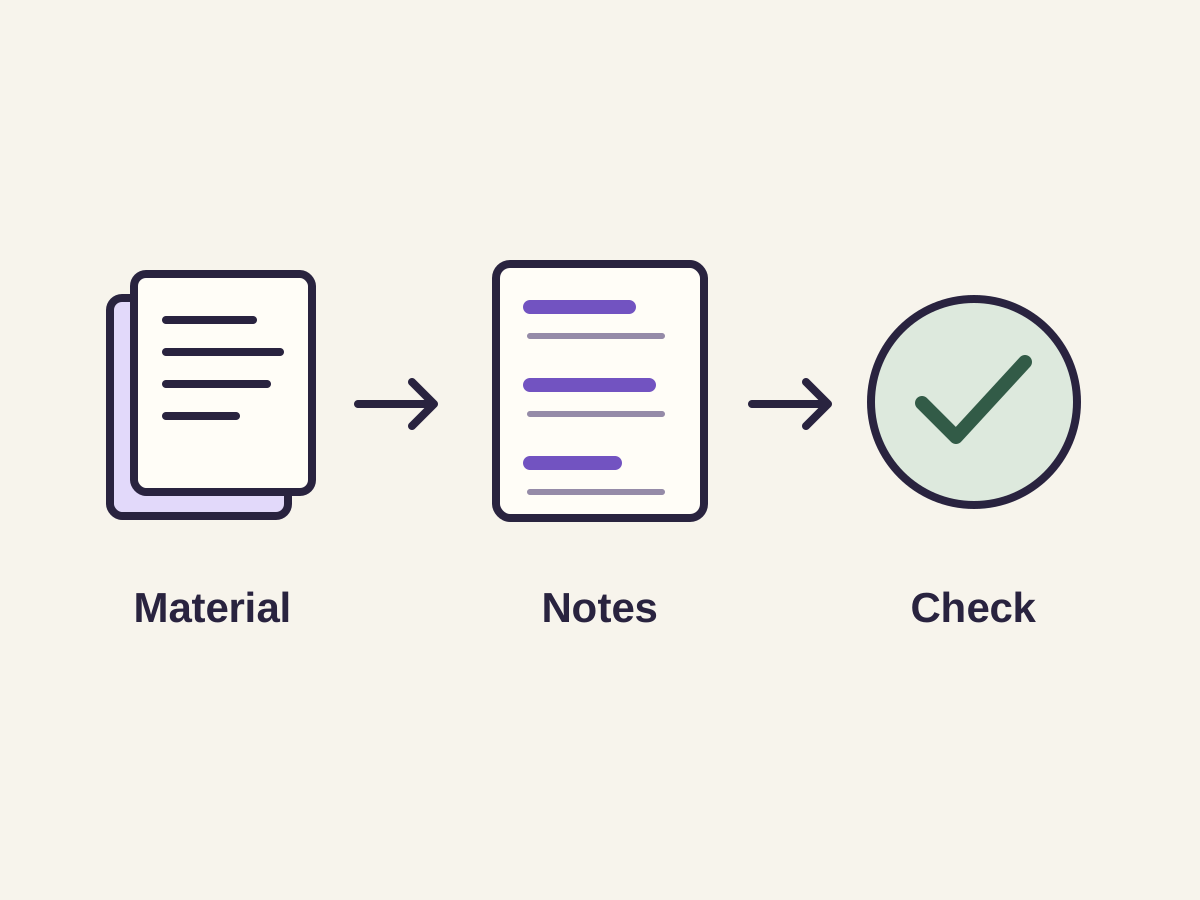
Make one list for each final. Write down the exam date, the units it covers, and the material you have: notes, PDFs, slides, lecture recordings, review sheets, and old assignments. Mark anything missing or confusing. This quick inventory stops you from spending two hours polishing notes for one class while ignoring another exam that needs more work.
- Put the earliest finals first, then mark the classes where your material is least organized.
- Separate recall-heavy topics such as terms, dates, and formulas from topics that require solving, comparing, or explaining.
- Give every class one next action you can finish, such as organize one lecture, make one flashcard set, or take one practice quiz.
Turn each subject into questions
Rereading helps you remember what a chapter looks like. It does not show whether you can answer a question about it. After a quick review, close the material and try to define the term, explain the process, solve the problem, or compare the two ideas from memory. If you get stuck, check the source and write down the exact gap instead of restarting the whole chapter.
- Use the Flashcard Maker for vocabulary, formulas, dates, and short explanations.
- Use the Quiz Generator for multiple-choice, true/false, and short-answer questions from your class material.
- Use the Practice Test Maker when you want a mixed-format review for an exam.
- If the material is still messy, organize it with Studi Notes before making questions.
Mix question types when the exam does
Multiple choice can check whether you recognize the right answer. True or false can expose small factual mistakes. Short answer makes you produce the answer without choices. If your final uses more than one format, use more than one format while studying. Keep the question mix close to what your teacher said the exam will include, when that information is available.
Review what you missed, not everything again
Keep a small missed-question list for each class. Write the concept, why your answer was wrong, and what the correct idea is. Use that list to plan the next session. A short list of real misses is more useful than rereading every page because it points to the material that still needs work.
Use the final evening for a narrow review
The night before a final is not the time to build a new study system. Review your missed-question list, the formulas or terms that still hesitate, and one or two representative questions. Get your materials ready for the morning and stop at a reasonable time. The goal is a focused final pass, not a guarantee that every possible question will feel easy.
A simple finals study loop
- Choose one class and one specific unit.
- Review the source just long enough to find the main ideas.
- Answer flashcards or practice questions without looking.
- Write down what you missed and check it against the class material.
- Use the misses to choose the next short study block, then switch classes when the block is done.
Questions students ask
How early should I start studying for finals?
Start when you know the exam dates and covered units. A week or more gives you room to revisit hard material, but a shorter plan can still help if you prioritize the most important topics and test yourself.
What should I study first for finals?
Start with the earliest exam and the class where your material is least organized. Within that class, focus first on high-value topics you cannot explain or answer without looking.
Are flashcards enough for finals?
Flashcards are useful for recall-heavy material. Add practice questions when the exam also requires solving, comparing, applying, or explaining ideas.
What should I do the night before a final?
Review the gaps you already found, answer a small set of representative questions, prepare what you need for the next day, and avoid restarting every unit from the beginning.

Keep studying
Keep reading
- Study Tips· 6 min readWhat an AI Lecture Note Taker Actually Does (and How to Use One Well)Turning a messy lecture into clean notes automatically sounds like magic, but it's a specific, understandable process with specific failure points. Here's what an AI lecture note taker actually does, what to watch for, and how to use it as part of a real study routine rather than a replacement for one.
 By Pranay
 - Study Tips· 6 min readHow to Turn Lecture Notes Into Flashcards (4 Ways — One Is Instant)If you're staring at a wall of lecture notes wondering how they're supposed to become something you can actually study from, here are four ways to get there — including the one that takes about 15 seconds.
 By Ben Hirsch
 - Study Methods· 6 min readHow to Use an AI Tutor for Studying (And When Not To)An AI tutor is available at midnight before a test, never gets impatient with the same question asked three different ways, and can re-explain a concept from a completely different angle instantly. It's also not the right tool for everything. Here's how to actually use one.By Ben Hirsch

Ready to try it on your own notes?
Start from the same class material you are already reviewing, then choose the study format that helps most.
Build a Finals Study SetTrusted by hundreds of users