
Key takeaways
- Practice tests built from your own notes match what your class actually emphasized.
- Good questions need understanding, match the exam format and have a clear right answer.
- Grade yourself strictly: a vague, partly right answer doesn't count as correct.
- The value is the list of gaps: turn factual misses into flashcards and work through concept misses.
In this articleShow
The fastest way to build a practice test from your own notes is to upload them to a tool that generates questions directly from that material — but the reason to do it from your own notes at all, rather than a generic question bank for the same subject, is that a generic bank tests generic material, and your actual exam will test whatever your specific class covered, in the specific way your teacher framed it. Here's what makes a practice question useful, how to build a set from your own notes (with or without AI), and how to grade yourself honestly once you have one.
Why a generic question bank isn't the same as your own material
Two classes covering "the causes of World War I" can emphasize completely different things — one teacher might focus on the alliance system, another on economic factors, another on a specific set of primary sources assigned as reading. A generic practice question bank for the topic tests whichever emphasis its author picked, which may or may not match yours. A practice test built from your own notes tests what you were actually taught, which is a more direct rehearsal for what you'll actually be asked.
What makes a practice question actually useful
- It requires more than pattern-matching a keyword — a weak question can often be answered by spotting one familiar word in the prompt; a strong one requires understanding the underlying concept well enough to apply it to a slightly unfamiliar framing.
- It matches the format you'll actually face — multiple choice trains recognition, short answer and free response train recall and explanation, and they're different skills (see the recognition-vs-recall distinction in active recall). Practicing only in a format easier than your real exam overstates how ready you are.
- It has a clear, checkable correct answer — a practice question you can't actually grade yourself against doesn't tell you anything about whether you're ready.
- It's drawn from material you were actually responsible for, not adjacent trivia that happens to be interesting but won't be tested.
Building a practice test from your own notes
Manually, this means going through your notes and, for each major concept, writing a question that would require you to explain or apply it — not just define it. This is slow but effective, since writing the question yourself forces you to identify what's actually testable in the material. The faster route: Studi's practice test generator reads your uploaded notes, slides, or textbook chapter directly and generates questions from that specific content, including short-answer and application-style questions rather than only multiple choice, so the practice set reflects your actual material rather than a generic bank.
Grading yourself honestly
The easiest way to overestimate your own readiness is grading generously — counting a vague, partially-right answer as correct because you know you were "basically" thinking along the right lines. Grade against the specific standard a real exam would use: does the answer include the key term or mechanism, not just gesture near it? If you got a question wrong or graded yourself generously on it, that's the signal to make a flashcard or revisit that specific concept — not to move on assuming a near-miss counts as understanding.
What to do with the questions you get wrong
A practice test's real value isn't the score — it's the list of specific gaps it surfaces. For factual gaps (you didn't know a definition or term), a flashcard is the right follow-up. For a gap in understanding a process or being able to apply a concept, ask Ollie Chat about the point you missed after checking your material. That lets you target exactly what went wrong instead of re-covering material you already know.
Questions students ask
Can AI generate a practice test from my own notes?
Yes — Studi's practice test generator reads uploaded notes, slides, or textbook chapters directly and builds questions from that specific content, including short-answer and application-style questions, not just multiple choice.
Why is a practice test from my own notes better than a generic one online?
Two classes covering the same general topic often emphasize different specifics. A generic question bank tests whatever emphasis its author chose; a practice test built from your own notes tests what your class actually covered, which is a closer rehearsal for your real exam.
How should I grade my own practice test answers?
Grade against the specific standard a real exam would use — does the answer include the actual key term or mechanism, not just gesture near the right idea. Grading generously on a vague answer makes you overestimate your own readiness.
What should I do with questions I get wrong on a practice test?
For a factual gap, turn it into a flashcard. For a gap in understanding a concept or process, identify the exact point you missed and ask about it after checking your class material instead of rereading the whole section again.

Keep studying
Keep reading
- Study Methods· 6 min readHow to Use an AI Tutor for Studying (And When Not To)An AI tutor is available at midnight before a test, never gets impatient with the same question asked three different ways, and can re-explain a concept from a completely different angle instantly. It's also not the right tool for everything. Here's how to actually use one.
 By Ben Hirsch
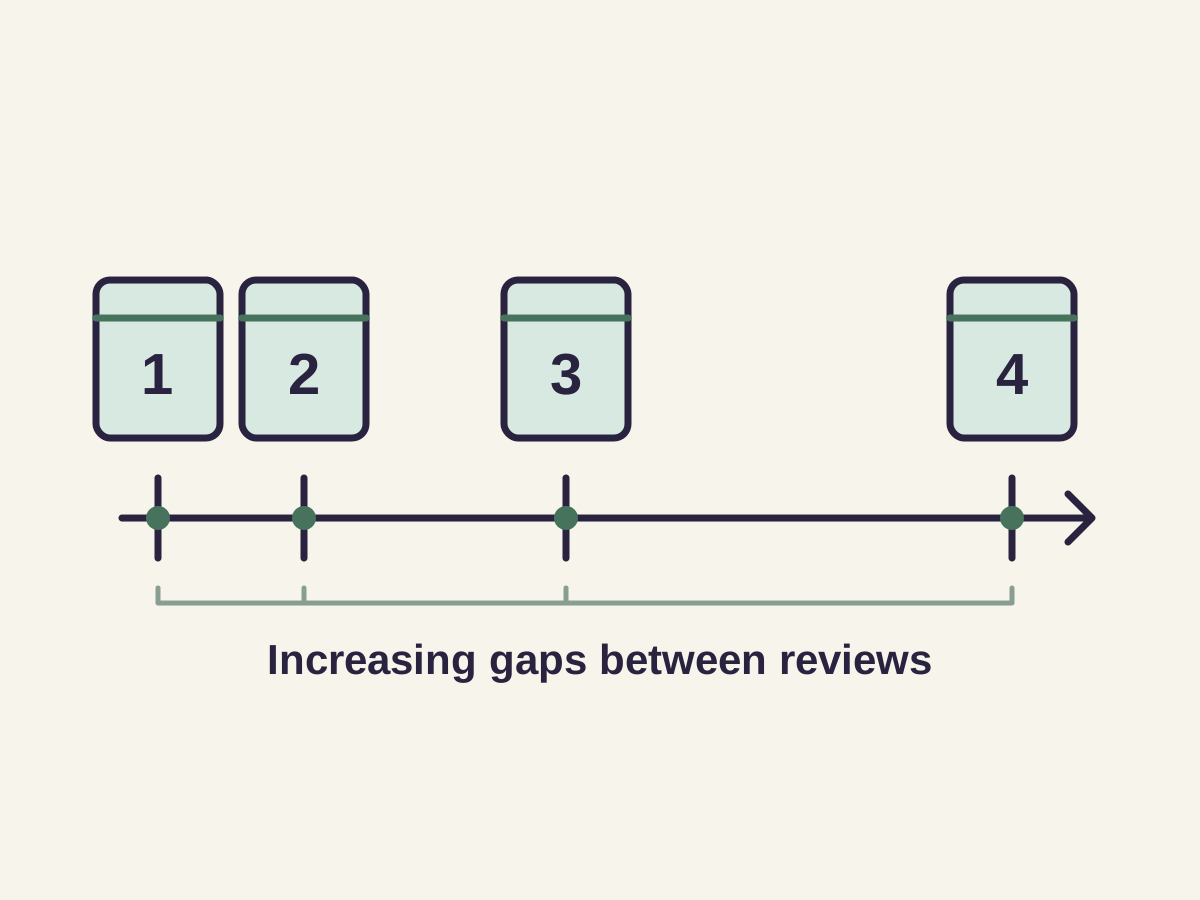
 - Study Methods· 6 min readSpaced Repetition: A Practical Guide to Studying Less and Remembering MoreCramming feels productive right up until the test is over and you've forgotten most of it a week later. Spaced repetition — reviewing material at increasing intervals over time — is the scheduling principle that makes studying stick. Here's how to actually apply it.
 By Pranay
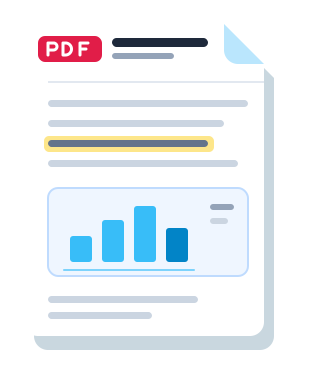
 - Study Methods· 8 min readHow to Study From a PDF (Without Just Rereading It)Not all PDFs are the same document under the hood, and treating a scanned textbook chapter the same way you'd treat a searchable one is where most PDF study workflows go wrong. Here's what actually differs, what commonly gets extracted incorrectly, and how to check your study material before you trust it.By Pranay

Ready to try it on your own notes?
Start from the same class material you are already reviewing, then choose the study format that helps most.
Build a Practice Test From My NotesTrusted by hundreds of users