

Key takeaways
- An AI tutor is best for explaining a concept another way and checking your own reasoning.
- Try the problem yourself first, then ask it to check your attempt.
- It can't spot misconceptions you never ask about, and it can be confidently wrong.
- Use practice tests for broad exam readiness and the tutor to get unstuck on one point.
In this articleShow
An AI tutor is best used for exactly two things: explaining a concept you don't understand yet, and checking your reasoning on something you attempted yourself. It's a poor substitute for the parts of studying that require judgment about what you personally don't know — a good human teacher or tutor who's watched you work for a semester can spot a misconception in your thinking that you wouldn't think to ask about, where an AI tutor can only respond to what you actually type. Here's how to use one for what it's genuinely good at.
What an AI tutor is actually good at
- Explaining the same concept multiple different ways until one clicks — an AI tutor doesn't get tired of rephrasing something, which matters if the first explanation (in your textbook, from your teacher) didn't land for you specifically.
- Being available at the actual moment you're stuck, which is often not during class or office hours — the night before a test, at 11pm, mid-problem-set.
- Answering a narrow, specific question without you having to sit through unrelated material to get to it.
- Checking whether your own explanation of a concept is actually correct, not just whether you can recite a definition — this only works if you attempt the explanation first, then ask the tutor to check it, rather than asking it to explain from scratch every time.
Where an AI tutor falls short
- It doesn't know what you don't know until you ask — a human teacher who has watched you work through problems over weeks can proactively spot a recurring misconception; an AI tutor can only respond to the specific question you type.
- It can't replace the accountability of a scheduled session with another person — some students genuinely study better when someone else is expecting them to show up prepared, which is a motivational function an AI tutor doesn't provide.
- For open-ended, subjective feedback (an essay's argument, a lab report's structure), a subject-expert human — a teacher, a tutor, a study group — still generally gives more reliable feedback than relying on AI alone, even where AI tools can offer a useful first pass.
- It can be wrong, confidently, the same way any source can be — treat its explanation as a starting point to verify against your class material, not as an unquestionable final answer, especially for a subject where your class's specific framing or terminology might differ from a generic explanation.
How to actually use one in a normal study session
- Try the problem or explain the concept yourself first, even badly — asking a tutor to check a wrong or incomplete attempt teaches you more than asking it to explain from a blank start, since it's forced to engage with your specific misunderstanding rather than giving a generic explanation.
- Ask 'why' follow-ups instead of accepting the first answer — if an explanation uses a term or step you don't fully follow, ask it to unpack that specific piece rather than moving on.
- Use it to unstick a single problem, then go back to independent practice — Studi's practice test generator is a better fit for building broad exam-readiness across a full topic than a tutor conversation is, since it's structured, gradable, and covers material systematically rather than only what you happened to ask about.
- Cross-check anything that matters for a grade against your actual class notes or textbook — Ollie Chat lets you ask questions about your own uploaded material, which can help keep the conversation connected to how your class covered a topic.
A concrete example
Say you're stuck on a chemistry problem involving limiting reactants. A weak way to use an AI tutor: ask it to "explain limiting reactants," get a generic textbook-style answer, and move on without actually testing whether you can apply it. A stronger way: attempt the specific problem yourself first, then ask the tutor to check your work and explain where your reasoning went wrong if it did — that forces the explanation to engage with your actual gap instead of a generic one, which is closer to what a good human tutor does in a one-on-one session.
Questions students ask
Is an AI tutor as good as a human tutor?
For explaining a concept on demand and checking your own reasoning, an AI tutor is genuinely useful and available in a way a human tutor often isn't (midnight, mid-problem-set). For proactively spotting a recurring misconception you haven't thought to ask about, or giving subjective feedback on something like an essay's argument, a human teacher or tutor is generally still more reliable.
Can an AI tutor help with homework?
Yes, particularly for getting unstuck on a specific problem or checking whether your own attempt at an explanation is correct. It works best when you attempt the problem first and use the tutor to check or unstick your reasoning, rather than asking it to solve everything from scratch.
How do I know if an AI tutor's explanation is correct?
Cross-check it against your class notes or textbook, especially for anything that will be graded — an AI tutor can be confidently wrong the same way any source can, and a good one built around your own uploaded material (like Studi's Ollie) reduces but doesn't eliminate the risk of an explanation that doesn't match how your specific class covered a topic.
Should I use an AI tutor instead of a practice test?
They serve different purposes. An AI tutor is best for unsticking a single concept or problem; a practice test is better for systematically checking readiness across a full topic, since it's structured rather than limited to whatever you happened to ask about.

About the author
Ben Hirsch
Founder of Studi
Ben Hirsch founded Studi to make studying from your own class material faster. He works on the product and writes about study methods students can actually keep up with during a busy semester.
More from Ben HirschKeep studying
Keep reading
- Study Methods· 6 min readHow to Make a Practice Test From Your Own NotesA practice test only helps if it tests what you'll actually be tested on. Here's how to build one from your own class notes instead of a generic question bank, what separates a useful practice question from a weak one, and how to grade yourself without fooling yourself.
 By Pranay
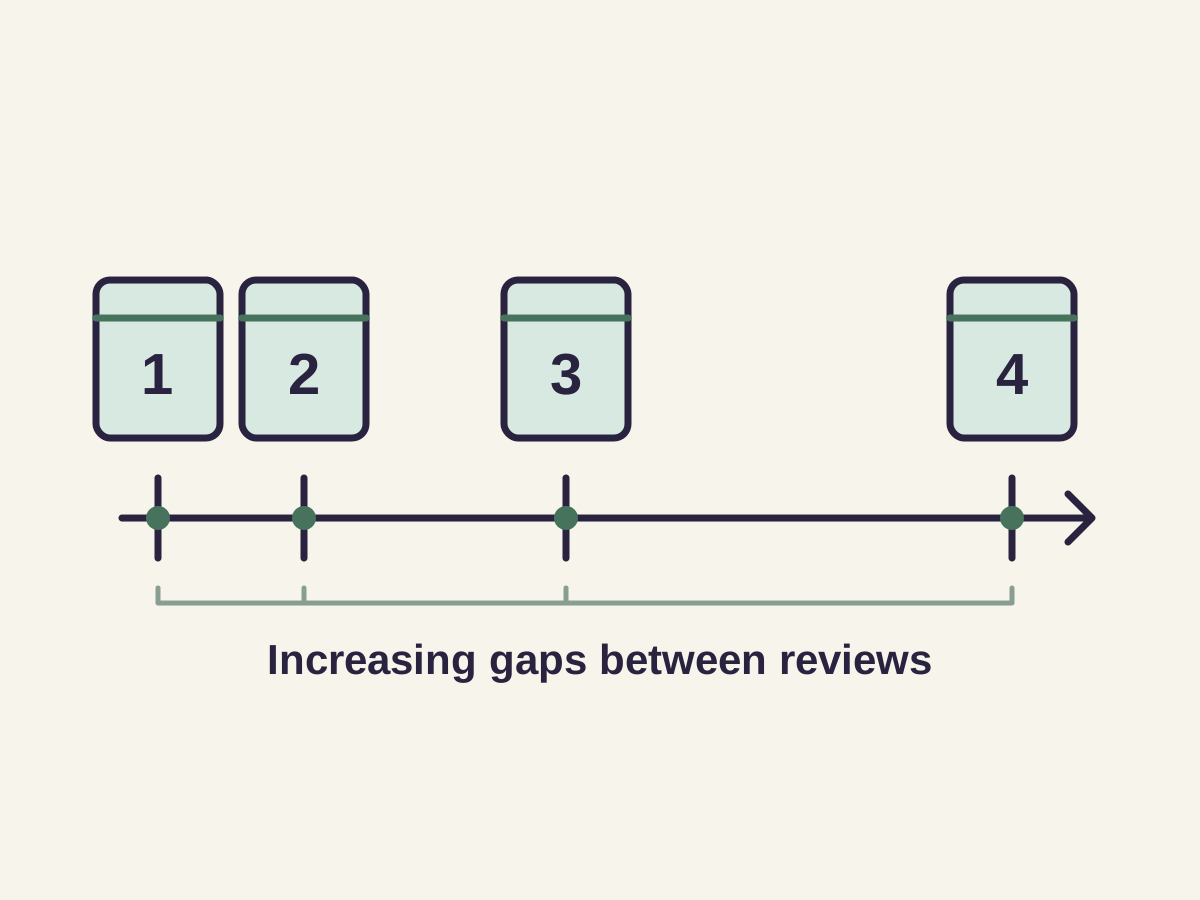
 - Study Methods· 6 min readSpaced Repetition: A Practical Guide to Studying Less and Remembering MoreCramming feels productive right up until the test is over and you've forgotten most of it a week later. Spaced repetition — reviewing material at increasing intervals over time — is the scheduling principle that makes studying stick. Here's how to actually apply it.
 By Pranay
 - Study Methods· 8 min readHow to Study From a PDF (Without Just Rereading It)Not all PDFs are the same document under the hood, and treating a scanned textbook chapter the same way you'd treat a searchable one is where most PDF study workflows go wrong. Here's what actually differs, what commonly gets extracted incorrectly, and how to check your study material before you trust it.By Pranay

Ready to try it on your own notes?
Start from the same class material you are already reviewing, then choose the study format that helps most.
Ask Ollie About Your MaterialTrusted by hundreds of users